
Crkva Svetog Duha (1585)
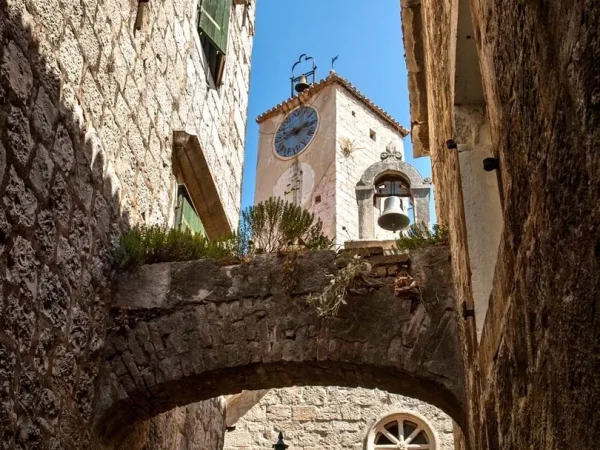
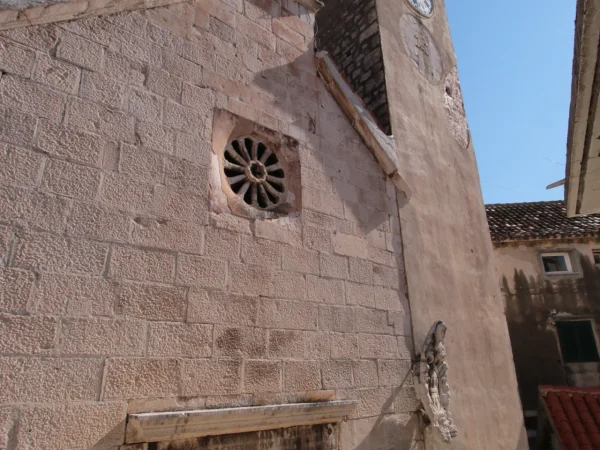
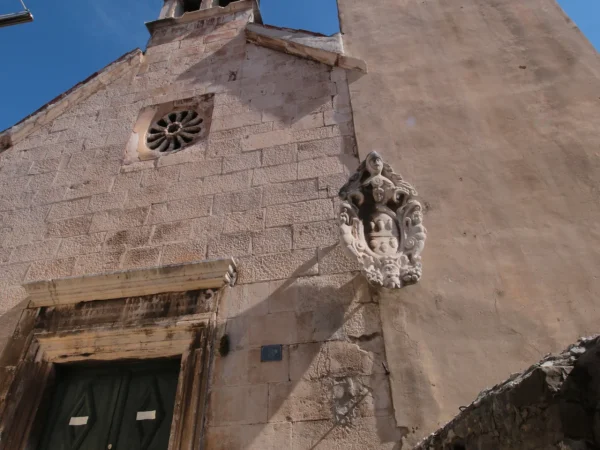
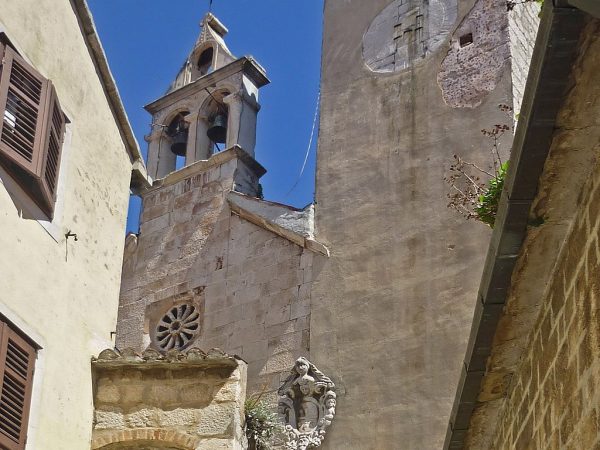
Crkva Svetog Duha predstavlja fascinantan primjer arhitektonske obnovе i prilagodbe, sagrađena 1585. godine na temeljima ranije gotičke crkve koja je potpuno renovirana kako bi zadovoljila promjenjive potrebe i estetske preferencije kasnog 16. stoljeća. Ova transformacija odražava širi obrazac religijske i arhitektonske obnove koji je zahvatio katoličku Europu tijekom razdoblja protureformacije, kada su mnoge starije crkve ponovno građene ili opsežno modificirane kako bi odražavale nove teološke naglaske i umjetničke senzibilitete.
The church’s strategic location just below the imposing fortifications of Omiš places it at the intersection of military and civilian life, embedded within the medieval administrative buildings of the commune that formed the civic heart of the town. This positioning was no accident; churches in medieval and early modern European towns were typically placed in locations that underscored their importance to both spiritual and temporal authority. The proximity to the fortress walls and administrative buildings created a powerful symbolic triangle of military might, governmental authority, and religious guidance that defined the social order of the community.
The decision to completely renovate the earlier Gothic structure rather than simply modify it speaks to the ambitious scope of the project and the community’s commitment to creating a religious space that would reflect contemporary architectural and theological ideals. The 1585 renovation would have incorporated the latest developments in church design, likely including improved acoustics for preaching, better lighting for reading and ceremony, and decorative elements that supported the Catholic Church’s renewed emphasis on visual beauty and emotional engagement in religious practice.